language access
language support
multilingual workplaces


They say that no one, absolutely no one, will read and study written word as deeply as a translator does. It is one of the things that has always made translation a very special job for me. The need to always learn, seek thorough understanding, and stretch into new places.
I remember what it felt like the very first time we were asked to translate content for an FDA submission years ago. The translation had to do with documentation coming from an EU country where a veterinary medicines company conducted clinical research. It was to support the company’s application for the FDA’s approval in the U.S. market.
We were looking at the collection of files that, together, told the story of how clinical research was accomplished, and we were pretty much in awe. First, the sheer volume was overwhelming. That, coupled with a non-negotiable deadline (causing delays in the time-to-approval and time-to-market timeline can cost the company millions of dollars), was intimidating enough.
But the more we pored over materials, the more we realized the gravity of the task. This translation wasn’t just about the words. It was a detailed account of every step that led to the conclusions. Calibration notes, equipment logs, operator IDs, receipts, and even hand scribbles were included - all evidence that the study happened, how it happened, and whether it happened under specific controls.
Regulators don’t just want to know what the study found; they want to know that the study was conducted, documented, and interpreted under transparent, auditable processes and that it followed very specific “rules of engagement”.
Now, shift the lens to the process of translation. The deliverable was a “mirror” translation. Think of an open book where the page on the left is the original, and the page on the right is the translation.
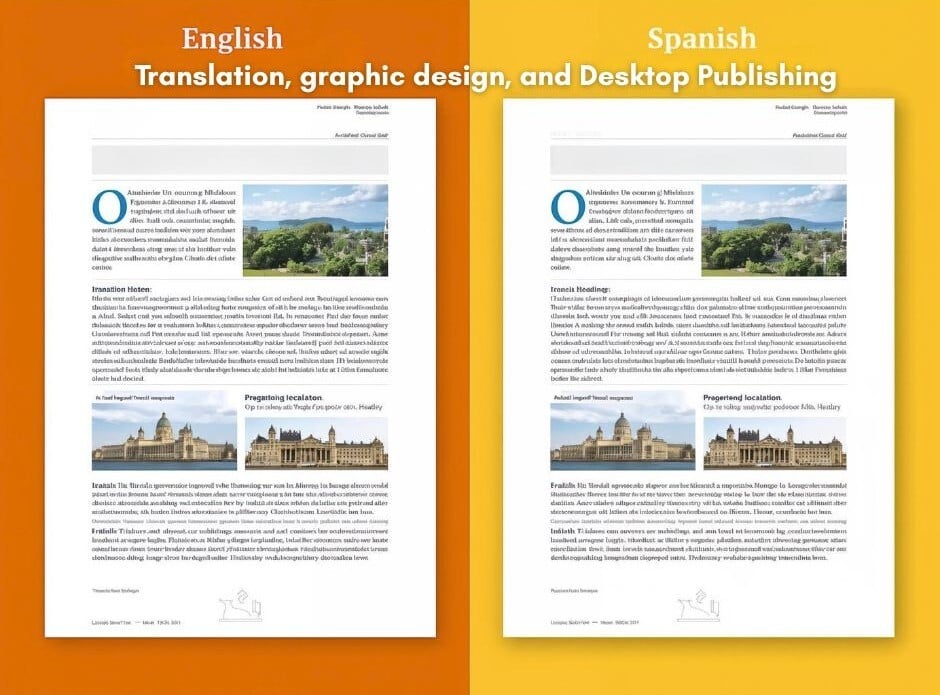 The content, as well as the placement of the individual elements (such as images, seals, signatures, etc.) in the translation, match the original exactly. It required the application of not just the standard translation workflows, but also a heavy dose of graphic design and Desktop Publishing (DTP).
In regulated contexts, the translated text is not just a final product; it’s an equal part of the evidentiary package, of equal importance. The gravity of the situation is that if we somehow messed up the translation, the resulting denial and/or delay in the approval would have cost the company millions.
Much like the process of the clinical research, our own process moves through a well-constructed, documented, and hence, auditable process. We do this for our own benefit, most of the time. Our clients seldom ask for any evidence of quality control or if a process was followed. At most, they will request a Certificate of Accurate Translation.
My point is that clients in regulated industries should ask their Language Services Providers to make the translation process visible. Otherwise, they can assume the worst: that controls, sources, approvals, and decisions behind the words are undocumented or unverifiable. That Google Translate was used, instead of a qualified human translator working in a secure environment.
The parallel is powerful: what regulators expect from the lab bench, they should also expect from the translation bench.
Evidence is provenance. In the lab story, every artifact proves what happened and when. In translation, every decision - who translated, who reviewed, what reference was used, and how terminology was chosen - supports the integrity of the text and its regulatory compliance.
Evidence is traceable. Regulators require a chain of custody from raw data to the final report. Likewise, a defensible translation requires traceability from source documents to translated text, including version history, source references, and rationale for wording.
Evidence is auditable. The lab example demonstrates auditable workflows with timestamps, approvals, and change logs. Translation should have the same auditable backbone: who approved, when, why, and under what policy.
Evidence is governed. The lab world uses asset ownership, access controls, and change-management. The translation world benefits equally from governance: linguistic assets are owned by a responsible party, there are controlled workflows, and documented AI usage.
If regulators can audit a lab bench, our customers should be able to audit the translation bench that is heavily influencing their regulatory outcomes, too. A defensible translation process provides a complete evidentiary trail that demonstrates provenance, traceability, and governance for every word.
The lab story isn’t merely an illustration for clinical trials; it’s a universal lens for regulated industries.
When translation is treated as evidence, you don’t just improve linguistic quality; you enable customers and regulators to see exactly how every decision was made, by whom, and under which controls.
To help you turn translation into regulator-ready evidence, we’ve created a downloadable Translation Defensibility Checklist. This practical resource outlines key points to cover, such as governance, AI disclosures, source references, change histories, and regulator-required audit trails.